 Simone
despite和despite of的区别是什么?
的有关信息介绍如下:"Despite" 和 "despite of" 都表示尽管或不顾某种情况或条件。然而,"despite" 是常用且正确的表达方式,后面直接跟名词或名词短语,适用于口语和书面语。而 "despite of" 是不正确的表达方式,在标准英语中不常用,应避免使用,可以改为使用 "despite"。
大家可以先看下面的表格了解一下 despite和despite of 吧:
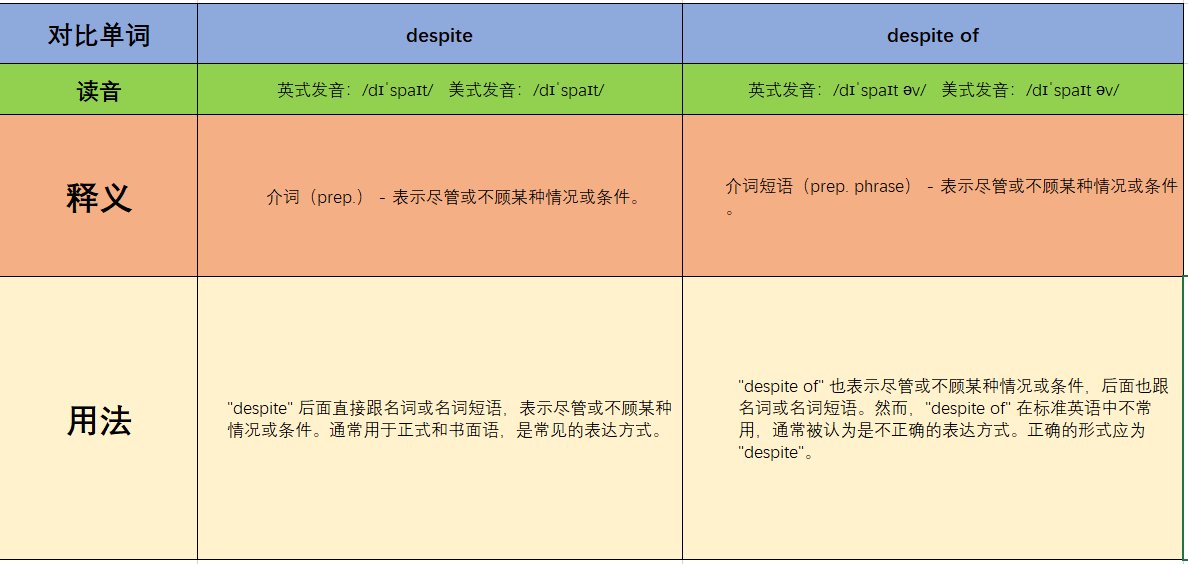
- despite:是一个介词,后面直接跟名词或名词短语,表示尽管或不顾某种情况或条件。常用于正式和书面语。
- despite of:是一个介词短语,后面也跟名词或名词短语,表示尽管或不顾某种情况或条件。然而,在标准英语中不常用,通常被认为是不正确的表达方式。应改为使用 "despite"。
- despite 是常用的正确表达方式,符合标准英语的语法规则和习惯用法。
- despite of 被认为是不正确的表达方式,应避免在书面和正式场合使用。
Correct: She achieved success despite her difficult upbringing.(尽管她的成长环境困难,她取得了成功。)
- despite 后面直接跟名词或名词短语,构成简洁明了的句子。
- despite of 后面跟名词或名词短语,使句子结构显得多余和啰嗦。
He continued his journey despite the bad weather.(尽管天气糟糕,他继续旅行。)
He continued his journey despite of the bad weather.(不常用的表达方式)
- despite 是常见且适用于口语和书面语,被广泛接受。
- despite of 虽然在一些方言或口语中可以听到,但在标准英语中不被推荐使用。
She finished the project on time despite her busy schedule.(尽管时间紧张,她还是按时完成了项目。)
She finished the project on time despite of her busy schedule.(不常用的表达方式)